Cobbler
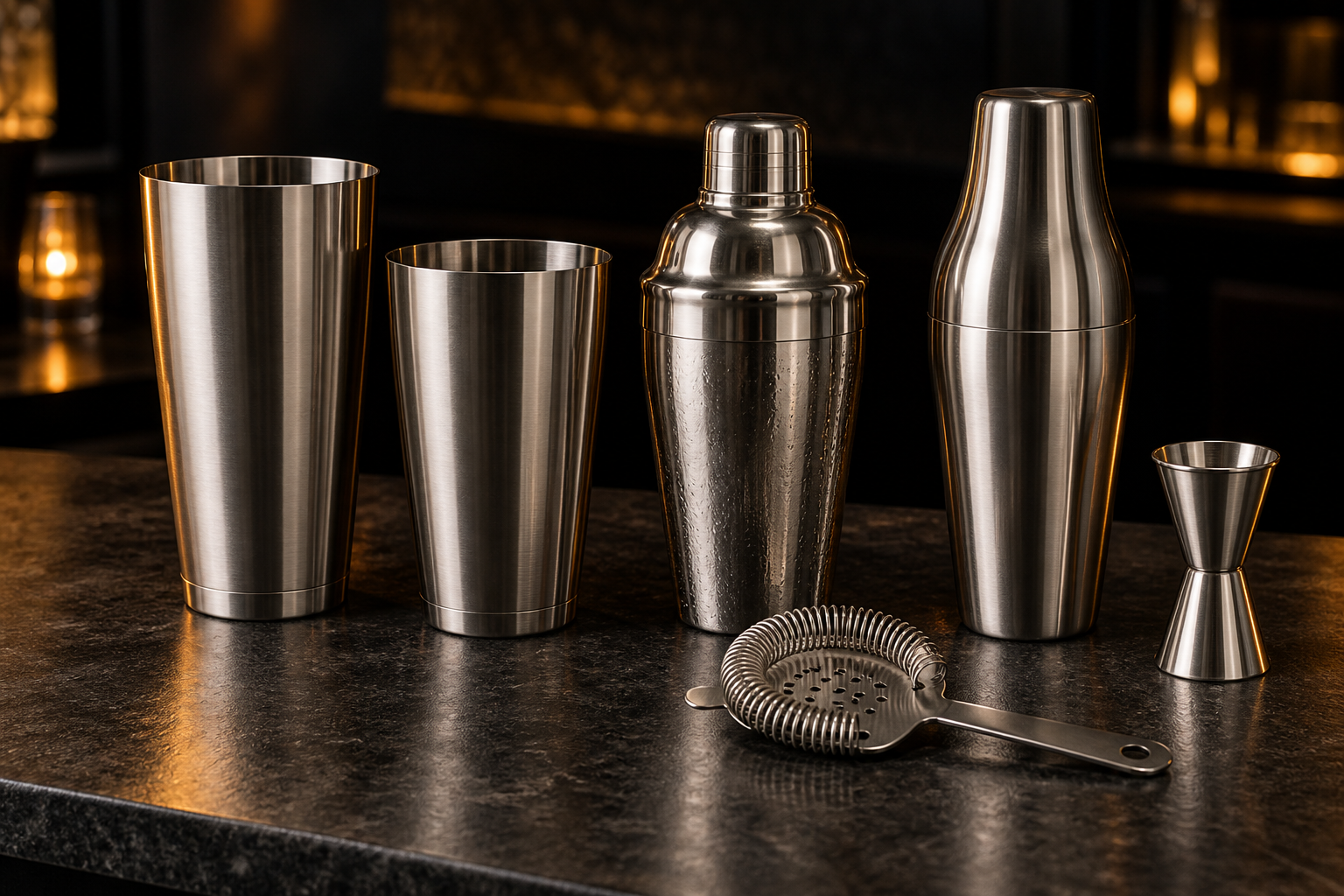
Three pieces and a built-in strainer. Straightforward, compact and familiar.
Free barware decision tool
Compare Boston, Cobbler and Parisian formats by the way you actually mix. The tool recommends a format and useful specifications—not a paid product winner.
Choose the workflow first. Finish, colour and gift-box extras come later.
One useful rule: ice needs working room, so never fill a sealed shaker to the rim.
Your starting point
The simplest all-in-one route: tin, built-in strainer and cap in one compact set.
Check before buying
Three-piece shakers can become tight when cold. Check that the cap and lid separate cleanly before buying.
Dual-unit jigger
Measure recipes rather than free-pouring.
Fine mesh strainer
Optional second strain for pulp or small ice chips.
As an Amazon Associate we earn from qualifying purchases. The search links are category comparisons, not endorsements of every result.
The useful distinction
Shiny copper colour, matte black coatings and gift-box extras can make two very different tools look equivalent. Start with the number of pieces, the straining method and the working capacity. Then compare finish and price within the right format.
Three pieces and a built-in strainer. Straightforward, compact and familiar.
Two fitted tins. Quick for repeated rounds, with a separate strainer.
Two shaped metal pieces. Sleek, but still a separate-strainer workflow.
Fit and release
Look for clear maker guidance on pairing, sealing and releasing the pieces. Reviews are most useful when they describe leaks, grip and repeat use rather than simply praising appearance.
Capacity
A capacity figure describes the container, not a safe fill line. Compare it with your normal recipe volume and leave headroom for ice and movement.
What is included
A Boston or Parisian shaker often needs a separate Hawthorne strainer. A useful set may also include a jigger, but decorative extras should not outweigh a reliable seal.
Method and sources
The recommendation is a transparent workflow match, not a laboratory test or a live-price comparison. We checked manufacturer descriptions to confirm representative format features and sizes, then kept the tool brand-neutral. Source check: 15 September 2026.
A Cobbler shaker is the simplest all-in-one starting point because its lid includes a strainer. A tin-on-tin Boston shaker is worth learning if you expect to make repeated rounds and do not mind buying a separate Hawthorne strainer.
A Boston shaker has two pieces and normally uses a separate strainer. A Cobbler shaker has three pieces: the main body, a lid with a built-in strainer and a small cap. The choice is mostly about workflow rather than drink quality.
Cold metal contracts and the pressure change can make fitted pieces grip tightly. Build a firm seal without forcing it, then follow the maker’s release method. Do not strike glass or use a damaged shaker.
Sometimes, but capacity labels do not account for every recipe and the space taken by ice. Use a roomy working chamber, leave headroom and repeat the batch if the shaker would be crowded.
Boston and Parisian shakers normally need a separate Hawthorne strainer. Cobbler shakers include a strainer in the lid, although a fine mesh strainer can still help when a recipe contains pulp or small ice chips.