Spirits 101
Best Blended Scotch for Whisky and Ginger Ale
Compare three blended Scotches and one blended-malt alternative using producer-published highball ratios, flavour direction and a repeatable home test.
·Updated ·9 min read·The Cocktail Pub editorial desk
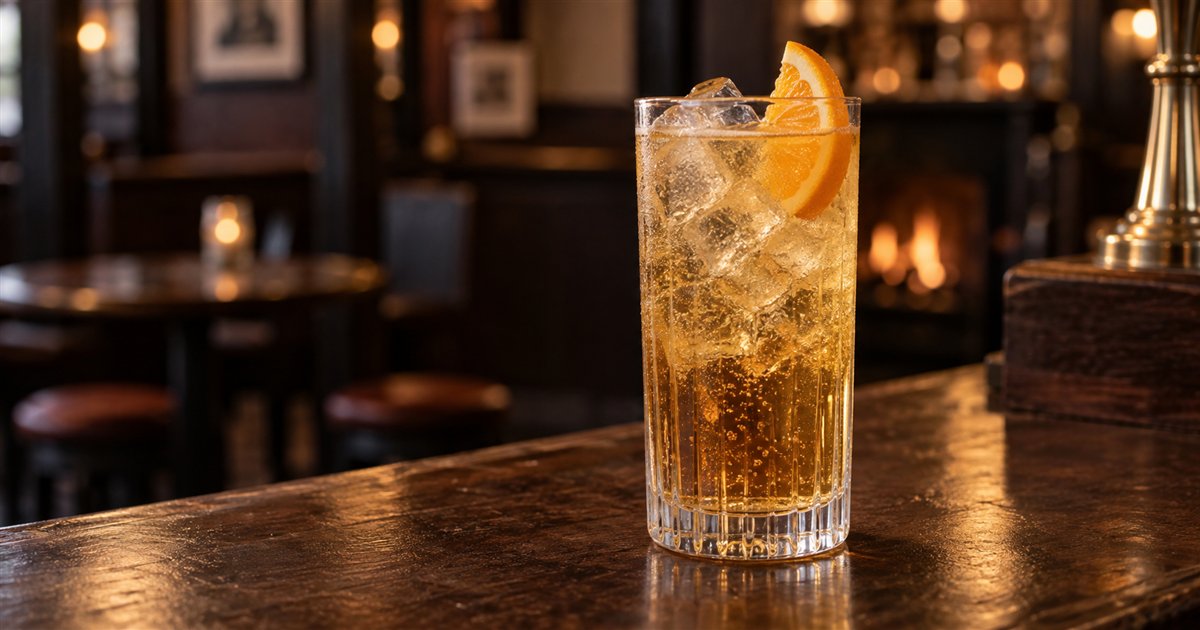
Chivas Regal 12 is the easiest all-round blended Scotch starting point for a simple whisky and ginger ale: its producer publishes a measured 50ml-to-150ml highball, and its fruit, honey and vanilla direction is easy to recognise beside a dry ginger ale. Choose Johnnie Walker Black Label when you want more smoke and depth, or Dewar's White Label when you prefer a shorter, more whisky-forward 1:2 serve.
Monkey Shoulder is also an excellent purpose-built mixing option, but it is a blended malt Scotch whisky, not a blended Scotch whisky. We include it as a useful comparison because the producer publishes a Ginger Monkey recipe. This guide compares published recipes and stated flavour direction; it is not presented as a blind tasting.
Quick answer: which bottle fits your highball?
| Bottle | Category | Producer serve | Choose it when |
|---|---|---|---|
| Chivas Regal 12 | Blended Scotch whisky | 50ml whisky + 150ml ginger ale | You want the safest fruit-led all-rounder |
| Johnnie Walker Black Label | Blended Scotch whisky | About 45–50ml whisky + 150ml ginger ale | You want smoke and spice to remain noticeable |
| Dewar's White Label | Blended Scotch whisky | 2oz whisky + 4oz ginger ale | You want a shorter, stronger 1:2 build |
| Monkey Shoulder Original | Blended malt Scotch whisky | 50ml whisky + 120–150ml dry ginger ale | You are happy to step outside the blended-Scotch category |
The ratios are not interchangeable marketing scores. Chivas and Johnnie Walker publish longer drinks around one part whisky to three parts mixer; Dewar's publishes a more concentrated one-to-two build; Monkey Shoulder gives a 120–150ml mixer range. Use the bottle and ratio together before deciding which style you prefer.
Our best blended-Scotch starting point: Chivas Regal 12
Chivas publishes a Ginger Highball using 50ml Chivas 12 and 150ml ginger ale, finished with lime. The brand describes the whisky through ripe fruit, honey and vanilla notes. Those are producer descriptions rather than our tasting claims, but they explain why this is the simplest first comparison for a sweet-spiced carbonated drink.
Use a dry ginger ale and a full glass of fresh ice. If the finished drink is too sweet, a squeeze of lime or a small soda top is more useful than adding less ice. If the whisky disappears, reduce the mixer to 120ml on the next serve rather than pouring more spirit into an already-built drink. Compare current Chivas 12 listings.
Best when you want more smoke: Johnnie Walker Black Label
Johnnie Walker's published Johnnie & Ginger recipe uses 1.5oz Black Label and 5oz ginger ale on its US page, while a regional version uses 50ml and 150ml. Both land close to a one-to-three long-drink structure. The producer positions Black Label around fruit, spice, vanilla and smoke, which makes it the logical option when ginger ale would otherwise feel too soft.
Start with the measured producer build before adding extra citrus. An orange wedge keeps the serve rounder; lime sharpens it. This is a flavour-direction choice, not evidence that Black Label is objectively better than Chivas. Compare current Johnnie Walker Black Label listings.
Best shorter build: Dewar's White Label
Dewar's official serve uses 2oz whisky and 4oz ginger ale, approximately 60ml and 120ml, with citrus. That is a one-to-two ratio, so it puts substantially more whisky into each mouthful than the longer Chivas build. It is the clearest comparison when a 1:3 highball tastes mostly of mixer to you.
Do not copy the larger measure automatically if you are managing alcohol intake. The useful lesson is the ratio: at home, you can test 25ml whisky with 50ml ginger ale in a smaller glass and preserve the same balance. Compare current Dewar's White Label listings.
The blended-malt alternative: Monkey Shoulder Original
Monkey Shoulder calls its serve the Ginger Monkey and specifies 50ml Monkey Shoulder Original, 120–150ml dry ginger ale and an orange wedge. It is especially relevant to this question because the recipe is explicit and the whisky is marketed for mixing.
However, category language matters. A blended Scotch whisky can combine malt and grain whiskies; a blended malt Scotch whisky combines two or more single malt Scotch whiskies from different distilleries. Monkey Shoulder belongs to the latter category. It can still be your favourite highball bottle, but it should not be described as the winner of a strict blended-Scotch comparison. Compare current Monkey Shoulder listings.
A repeatable whisky-and-ginger recipe
- Chill a highball glass and the ginger ale.
- Fill the glass fully with fresh, solid ice.
- Measure 50ml blended Scotch over the ice.
- Add 120ml dry ginger ale for the first test, pouring slowly to preserve carbonation.
- Give the drink one gentle lift with a bar spoon and garnish with orange or lime.
- Taste before adding the final 30ml mixer. Stop at 120ml for more whisky presence or continue to 150ml for a longer drink.
This 50ml-plus-120–150ml method deliberately overlaps the Chivas, Johnnie Walker and Monkey Shoulder producer serves. It gives you a controlled starting point without pretending every ginger ale has the same sweetness or strength of flavour.
How to compare bottles without fooling yourself
A casual comparison can easily become a comparison of temperature, dilution or mixer volume instead of whisky. Use the same glass, ice, ginger ale, whisky measure and final mixer volume for each bottle. Label the glasses underneath if someone else can pour them for you. Taste in two or three small samples rather than making several full-strength highballs.
- Keep temperature equal. Warm mixer loses carbonation faster and tastes sweeter.
- Use the same ratio. A 1:2 Dewar's serve will naturally taste more spirit-led than a 1:3 Chivas serve.
- Change one garnish at a time. Orange and lime pull the drink in different directions.
- Record preference, not a universal score. “More smoke” and “less sweet” are more useful notes than a number out of ten.
- Retest your winner at its producer ratio. The best bottle in a fixed 1:3 test may not be your favourite at 1:2.
Ginger ale or ginger beer?
Ginger ale is usually the softer and more carbonated choice for this two-ingredient highball. Ginger beer is generally spicier and can dominate a light blend, although brands vary. If you only have ginger beer, begin with less mixer, add it gradually and expect a different drink rather than treating the two labels as substitutes.
“Dry” on a ginger-ale label does not guarantee identical sugar content between brands. Check the current nutrition panel when sweetness matters. Fresh lime adds acidity but does not remove sugar; soda water can lengthen the drink without adding more.
What to buy first
If you already own one of these bottles, use it before buying another. Technique and mixer choice can fix many disappointing highballs. If you are buying specifically for this drink, compare the delivered price for the same bottle size, check the current ABV on the retailer listing and avoid relying on a promotional price quoted months earlier.
The retailer comparison links are affiliate links, so we may earn a commission without changing your price. Rankings are based on recipe fit, not commission.
A measured jigger is the first piece of equipment worth buying; special glassware is optional. Use the site's whisky and ginger ratio calculator to scale a published serve into bottles, mixer, cost and UK units, or the cocktail cost-per-serve calculator for a different recipe.
Alcohol units and a smaller serve
UK alcohol units are calculated as volume in millilitres multiplied by ABV, divided by 1,000. A 50ml pour at 40% ABV contains 2 UK units before any alcoholic mixer is added. A 25ml pour at the same strength contains 1 unit. Ginger ale is normally alcohol-free, but check the product you use.
For a smaller highball, use 25ml whisky and 60–75ml ginger ale in a compact glass with plenty of ice. That keeps the same approximate ratio while halving the spirit measure. UK guidance advises adults not to regularly exceed 14 units a week; no drinking level is completely risk-free.
Sources and method
- Chivas Regal — Chivas Ginger Highball recipe
- Johnnie Walker — Johnnie & Ginger recipe
- Dewar's — Dewar's and Ginger Ale recipe
- Monkey Shoulder — Ginger Monkey recipe
- Scotch Whisky Association — Scotch whisky categories
- NHS — calculating alcohol units
- GOV.UK — UK Chief Medical Officers' low-risk drinking guidance
Producer recipes, category definitions and health guidance were checked on 16 September 2026. The recommendation compares published specifications and flavour direction. We did not run a documented blind panel, so we do not claim that one bottle wins for every drinker.
Frequently Asked Questions
What blended Scotch is best with ginger ale?
Chivas Regal 12 is the easiest all-round starting point because its producer publishes a 50ml whisky to 150ml ginger-ale recipe. Johnnie Walker Black Label is the better direction for more smoke; Dewar's White Label has an official, more concentrated 1:2 serve.
What is the best ratio of whisky to ginger ale?
Start with one part whisky to 2.5–3 parts ginger ale: 50ml whisky and 120–150ml mixer. Dewar's publishes a stronger 1:2 version. Use the same measured ratio when comparing bottles.
Is Monkey Shoulder a blended Scotch whisky?
No. Monkey Shoulder Original is a blended malt Scotch whisky, meaning its Scotch component is a blend of single malt whiskies rather than malt and grain whiskies. It remains a relevant mixing option because the producer publishes a Ginger Monkey highball.
Should I use ginger ale or ginger beer with Scotch?
Use ginger ale for a softer, longer highball that leaves more room for the whisky. Use ginger beer when you deliberately want more ginger heat. Brands vary, so adjust the volume rather than assuming they are equivalent.
What garnish goes with whisky and ginger ale?
Orange is the rounder starting point and appears in the Ginger Monkey serve. Lime adds sharper acidity and appears in the Chivas recipe. Try the drink ungarnished first, then change only the garnish.
Scotch whisky is alcoholic. Measure the pour and calculate units from the ABV on your bottle. This guide is not medical or driving advice.
What's on your shelf?
Tick what you own and get three recipes, with buy links for anything you're missing. Or browse whisky cocktails.
Open the generator →